

Foam is one of the most important components in mattresses, pillows, upholstered furniture and countless comfort products. Traditionally, for many manufacturers, it has also been a material to source from specialised suppliers. But in a manufacturing environment increasingly shaped by changing sourcing strategies, shorter response times and the need for greater product differentiation, a different question is gaining relevance: how much control should a manufacturer have over one of the materials that most directly determines the characteristics of its final product?
A GLOBAL INDUSTRY UNDER PRESSURE
According to the 2026 CSIL report The World Upholstered Furniture Industry, global upholstered furniture consumption was worth approximately USD 77 billion in 2025. The industry remains highly globalised, with more than 40% of worldwide production exported, making manufacturers particularly exposed to changes in tariffs, trade policies and sourcing strategies.
The United States provides an especially clear example of this changing environment. CSIL describes selective reshoring as one of the defining features of the current US upholstered furniture market. Imports still cover close to 40% of US consumption, but companies are reconsidering manufacturing locations product by product as tariffs and sourcing conditions evolve.
Reshoring does not automatically mean producing foam internally. Nevertheless, it reflects a wider movement towards reconsidering where production takes place, how long supply chains should be and which manufacturing processes are strategically important enough to control more directly.
For companies whose products depend heavily on polyurethane foam, foam production can be part of that discussion.
WHY GREATER CONTROL OVER FOAM MATTERS
The importance of foam in the home textile and furniture industries is difficult to overstate. According to EUROPUR, around 50% of flexible polyurethane slabstock foam produced in Europe is used in mattresses and approximately 35% in furniture.
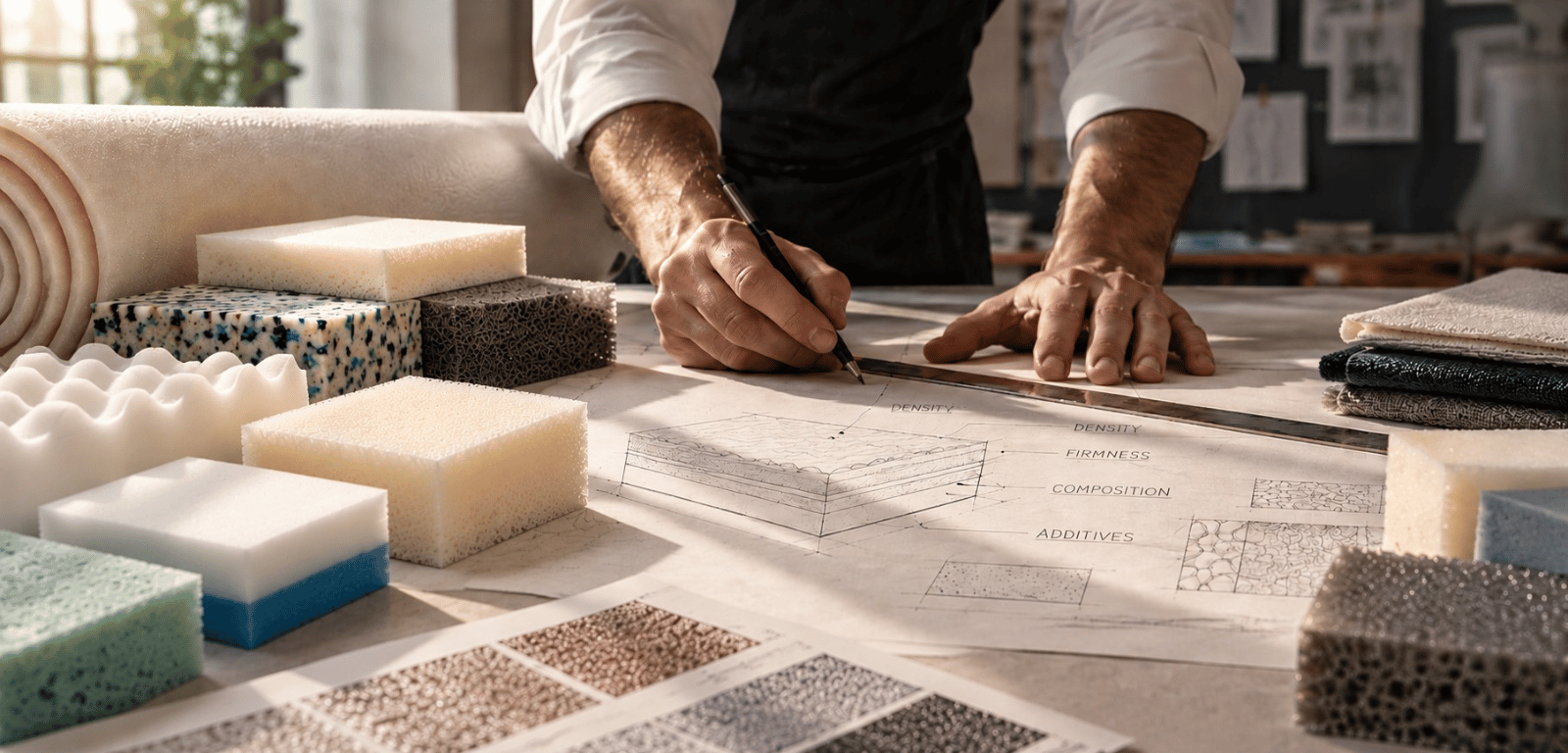
Its function also extends far beyond simply filling a product. Density, hardness, ILD/IFD (Indentation Load/Force Deflection), resilience and formulation contribute directly to comfort, support, durability and product positioning.
This is why some vertically integrated manufacturers already treat foam development as part of their own product-development process. Industry examples show companies linking internal foam capabilities with faster responses to changing demand, control over quality standards, product innovation and the development of differentiated comfort solutions.
The strategic advantage is therefore not simply “making instead of buying”. It is the possibility of turning foam from a predefined purchased material into a manufacturing variable.
A producer that controls the foaming process can potentially work directly on density, firmness, ILD/IDF, formulation and other characteristics according to the needs of a mattress, pillow, sofa cushion or other finished product. This may include the development of fire-retardant formulations or the incorporation of solid and functional additives — for example gels, copper-infused components or other materials designed to deliver specific thermal, comfort or performance properties. This flexibility gives manufacturers the opportunity to experiment with new recipes and adapt production according to individual product ranges rather than being limited exclusively to the specifications available in a supplier catalogue.
FROM FOAM BUYER TO FOAM PRODUCER
Producing foam in-house is not the right choice for every manufacturer. Volumes, investment, production requirements and chemical sourcing all need to be evaluated carefully.
However, for manufacturers with an appropriate production profile, vertical integration introduces a different way of thinking about foam procurement. Instead of ordering finished blocks and adapting production around available materials, foam can be produced according to the company’s own requirements and production schedule.
This can be particularly valuable when manufacturers need a broad portfolio of products, frequently changing specifications or proprietary material characteristics. It also creates a closer connection between R&D and manufacturing: rather than developing a finished product around an existing foam, the foam itself can become part of the development process.
BLOCK FOAM OR MOLDED FOAM?
There is no single approach to in-house foam production.
For mattresses, pillows, upholstery and other products requiring foam that will subsequently be cut, profiled or converted, block foam production is one option. Chemical components react and expand to create a polyurethane block, which can then be processed into the shapes and dimensions required by the finished product.
A second approach is molded foam production. In this case, polyurethane components are introduced directly into a mold, where the foam expands and cures into the required geometry. This makes molding particularly suitable for products where a repeatable three-dimensional shape is required, such as shaped cushions, seating components, backrests and certain types of pillows.
The choice therefore depends on what a manufacturer needs to produce: a versatile block to be converted into multiple products, or a finished foam component with a predefined shape.
WHAT BRIGHI BRINGS TO THE TABLE: IN-HOUSE FOAM PRODUCTION
Brighi has developed different solutions aimed at giving manufacturers greater control over this critical production stage.
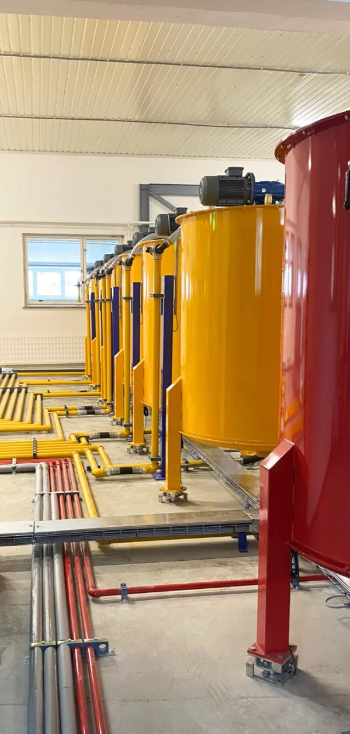
For companies working with foam blocks, the FP-400 single block foam making machine is a low-pressure box-pouring system for discontinuous polyurethane production. The entire foam making process is designed to ensure a uniform distribution of the formulation and consistent foam properties throughout the entire block.
The machine’s main advantage is flexibility. The system can produce different MDI- and TDI-based foams and allows manufacturers to customise block weight, dimensions and formulations. This makes small to medium batches, customised products and formulation development possible without requiring the volumes associated with a traditional continuous foam line.
For manufacturers whose products require predefined shapes rather than subsequently converted blocks, high-pressure or injection-based molded foam production mod. FP-200 represents another possible route, allowing polyurethane to be produced directly inside a mold.
The common principle behind both approaches is the same: bringing foam production closer to the finished product.
In a market where manufacturers are continuously reassessing sourcing, responsiveness and product differentiation, this creates a new strategic possibility. Foam no longer has to be seen exclusively as a material to purchase. For the right manufacturer, it can become a capability to control.